
 22.10.2024
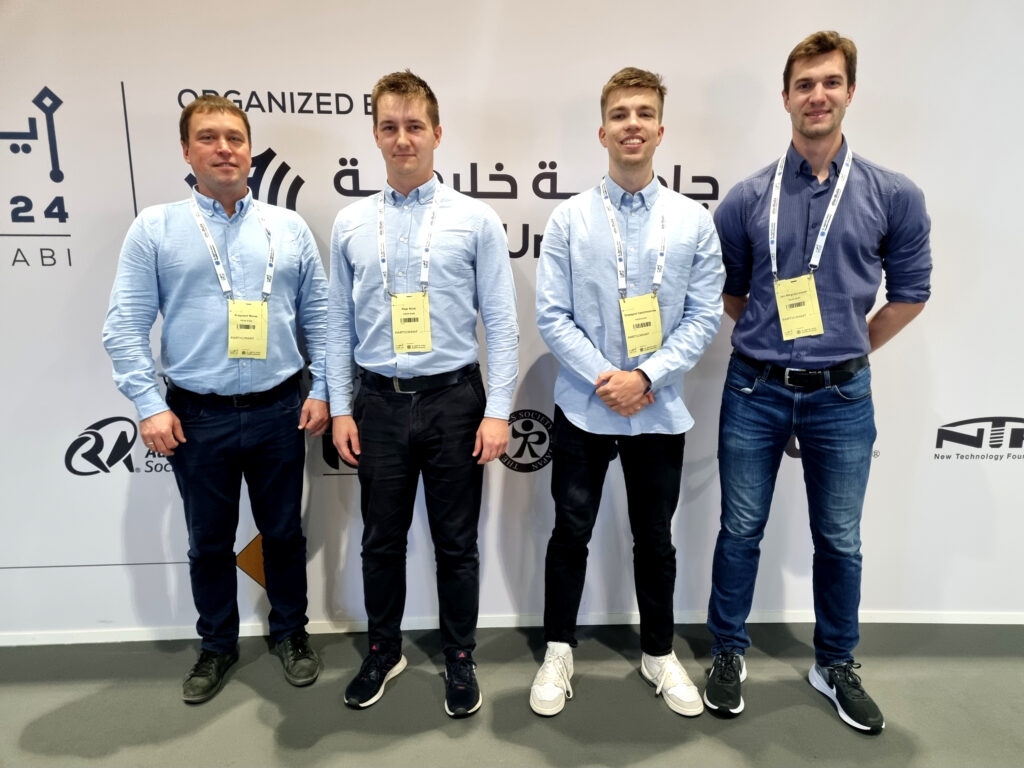
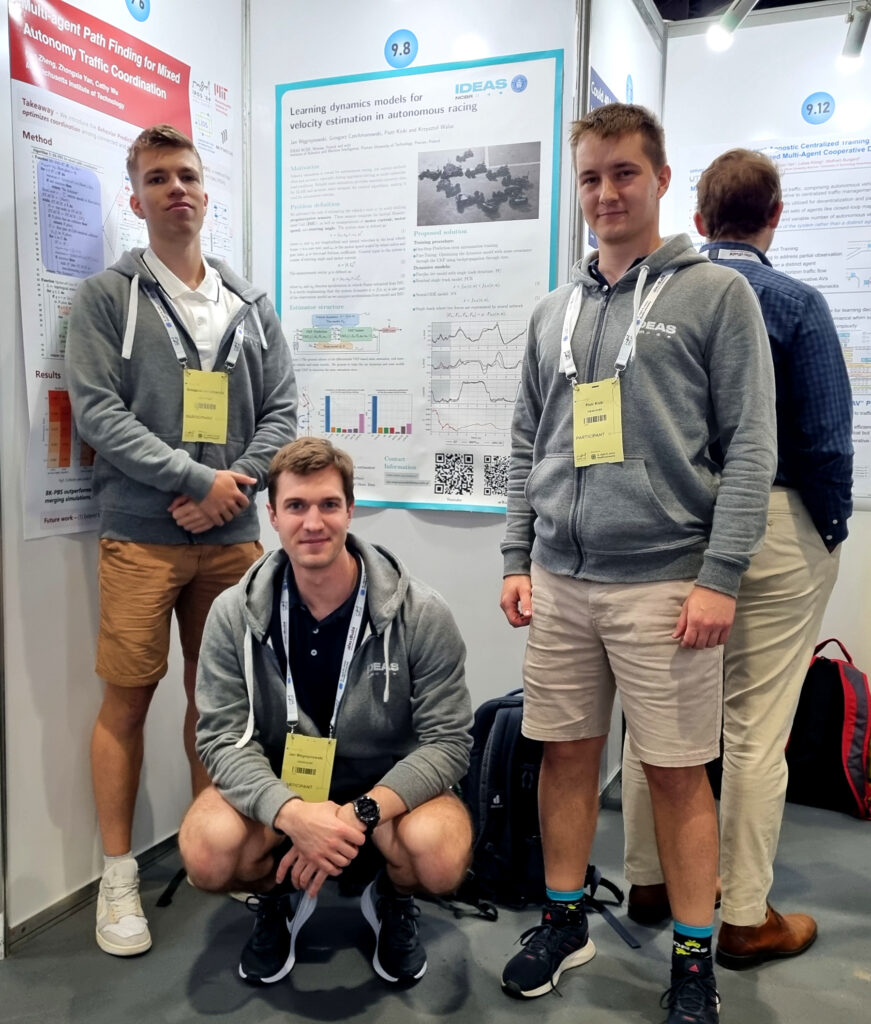
The team presented 3 co-authored publications exploring advancements in autonomous racing, deformable object manipulation, and human-robot collaboration. (Links in comment). Thanks to co-authors:
- Alessio Caporali, Kevin Galassi, Riccardo Zanella, Gianluca Palli
- Sławomir Tadeja, Tianye Zhou, Matteo Capponi, Thomas Bohné, Fulvio Forni
- and Poznań University of Technology, where all our team members also work.
‘This year, the conference left the beaten track and wandered to the Middle East for the first time in its history. We could spot a growing interest in solving multi-agent problems, exploiting LLMs in robotics, and in general leveraging learning-based approaches to enhance solutions to most basic problems like, perception, localization, planning and control. Besides presenting our research Krzysztof Walas served as chair of 3 oral sessions.’
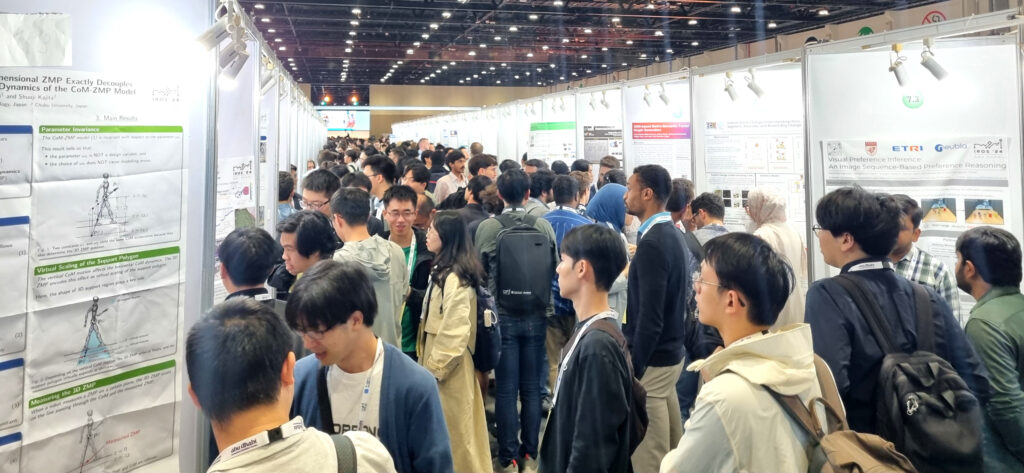
‘There is a growing interest in multi-robot systems. Yet, still many basic single-robot problems are far from being solved. People often ignore recent advances in the field and use very old methods as baselines.’
So there’s still a lot to do!
1. „Learning Dynamics Models for Velocity Estimation in Autonomous Racing”
Authors propose a new velocity estimation method using a learned dynamics model and friction coefficient estimation, improving accuracy in aggressive autonomous racing and adapting to unseen road conditions.
https://www.arxiv.org/abs/2408.15610
2. „Deformable Linear Objects Manipulation with Online Model Parameters Estimation”
This study introduces a neural network-based framework for controlling the shape of deformable linear objects (DLOs) by adapting model parameters in real-time, improving manipulation accuracy in complex scenarios.
https://ieeexplore.ieee.org/document/10412116
3️. „Using Augmented Reality in Human-Robot Assembly: A Comparative Study of Eye-Gaze and Hand-Ray Pointing Methods”
This research explores how eye-gaze and hand-ray pointing methods in augmented reality can improve human-robot collaboration in assembly tasks, revealing that eye-gaze leads to faster task completion.
https://www.repository.cam.ac.uk/items/37971780-69e5-4743-9f93-873208ffd291
Learn more about Physical interaction robotics research team